Palindromes are written into your DNA
“A man, a plan, a canal: Panama” has a molecular cousin: your genome is full of sequences that read the same in both directions.
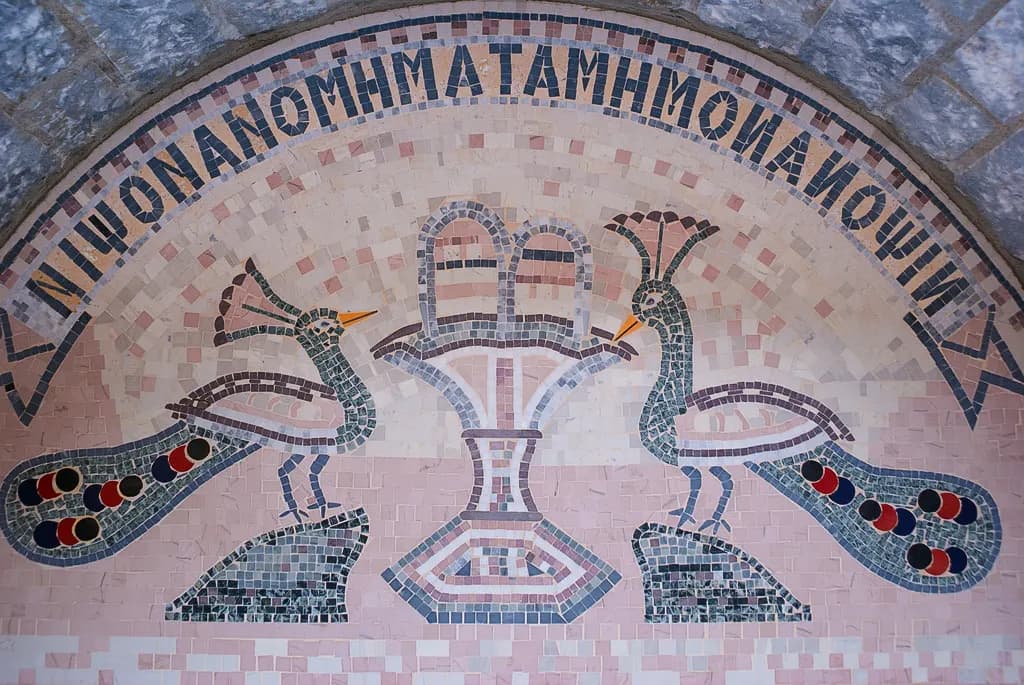
Language has racecar, level and the most famous of all, “A man, a plan, a canal – Panama!”, credited to the British puzzler Leigh Mercer.
Numbers have them too (12321). The mathematical question of how often numbers become palindromic when you add them to their own reversal still has open cases: nobody has proved whether 196 ever becomes one.
The biological version
DNA has two strands that pair A–T and G–C. A sequence is a biological palindrome when one strand read forwards equals the other strand read backwards:
5′ – G A A T T C – 3′
3′ – C T T A A G – 5′
Read either strand from its 5′ end and you get GAATTC.
Bacteria make restriction enzymes that recognise sequences like this and cut DNA there. It works as an immune system against viruses. In the 1970s scientists began using these enzymes as molecular scissors, which launched genetic engineering. The enzyme that cuts GAATTC, EcoRI, is still used in labs every day.
The same symmetry that makes a sentence fun to read is something molecules can recognise.
Follow the thread
- Same patternThe Sator Square The Sator Square is a two-dimensional palindrome.
- Same patternBuffalo buffalo Buffalo buffalo… Constrained wordplay that turns out to reveal real structure.
- Same patternThe novel with no letter E Both are wordplay where a rigid rule about letters becomes the engine of creativity.