Many languages have two words for “we”
When you say “we’re going to dinner”, are you inviting the listener? English leaves it ambiguous. Hundreds of languages don’t.
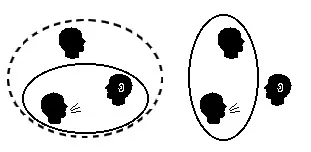
“We should go to the cinema.” Does that include you? In English, you have to guess from context.
In many languages you don’t. They have two words:
| Language | Inclusive “we” (you and I) | Exclusive “we” (not you) |
|---|---|---|
| Malay / Indonesian | kita | kami |
| Tok Pisin | yumi | mipela |
| Mandarin (northern colloquial) | zánmen | wǒmen |
The Tok Pisin pair says it plainly: yumi is “you-me”, mipela is roughly “me-fellows”.
Where it’s found
Linguists call this clusivity. It is nearly universal among Austronesian languages, from Madagascar to Hawaii, and common in northern Australia, India, eastern Siberia, many indigenous languages of the Americas, and parts of Africa and the Caucasus. No European language outside the Caucasus has it.
Why it’s worth knowing
It is a good reminder that languages differ in what they make you say, not only in what they let you say. A Malay speaker must decide whether the listener is included. An English speaker can stay vague, sometimes usefully, as in a manager’s “we need to work harder”.
Bring it up
“In Malay, ‘we’ has two forms, one that includes you and one that doesn’t, so you always know if you’re invited.”
Follow the thread
- RelatedThe Kazakh bride who renames her husband’s family Languages and customs encode family relationships in ways outsiders rarely notice.
- RelatedThe temple kitchen that feeds tens of thousands every day, free A ritual built on including everyone at the same table.
- RelatedWhy “mama” sounds the same almost everywhere Two features of language that look universal, until you check across many languages.
- In contrastBuffalo buffalo Buffalo buffalo… English packs many meanings into one word; other languages split one meaning into several words.
- In contrastBorn Shinto, married Christian, buried Buddhist Some categories that feel either/or in one culture are both/and in another.