The temple kitchen that feeds tens of thousands every day, free
At the Golden Temple in Amritsar, anyone, of any religion, can sit on the floor and eat a free meal, cooked and served mostly by volunteers.
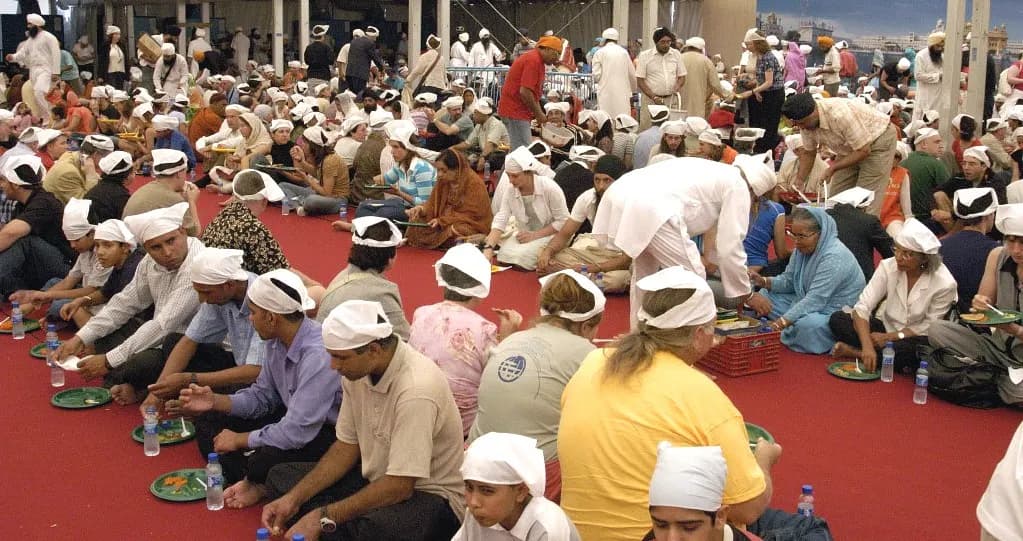
Sikhism was founded by Guru Nanak in Punjab around 1500. One of its earliest institutions is the langar, the community kitchen, and it’s still one of the most striking things a visitor can experience.
Everyone on the floor
The rule is simple: anyone may eat, and everyone eats the same food, sitting together on the floor. In a society divided by caste, where people of different castes often wouldn’t share food, this was a radical, practical statement of equality. The meal is simple and vegetarian (lacto-vegetarian), so that no one’s dietary rules exclude them.
The third Guru, Guru Amar Das, reportedly required every visitor, including the Mughal emperor Akbar, according to tradition, to eat in the langar before meeting him.
The Golden Temple
At the Harmandir Sahib (Golden Temple) in Amritsar, the langar runs around the clock. Reports put the number of people fed at around 50,000 to 100,000 a day, rising on festivals. Huge cauldrons of dal, flatbreads made by rotating teams and dishwashing lines are run largely by volunteers doing seva, selfless service.
Beyond Amritsar
Almost every gurdwara in the world runs a langar, and many are open to anyone who walks in. During the COVID-19 pandemic, gurdwaras around the world turned their kitchens into food-distribution centres. One in the US served more than 145,000 free meals in two months.
Bring it up
“Any visitor can eat free at the Golden Temple in Amritsar. It’s reported to serve tens of thousands of meals a day, mostly prepared by volunteers.”
Follow the thread
- RelatedThree meals a day is a fairly modern habit How and with whom we eat is shaped by beliefs and social rules, not just hunger.
- RelatedMany languages have two words for “we” A ritual built on including everyone at the same table.
- Same patternIn a Kazakh home, a half-empty cup is a compliment Two traditions where feeding guests is a moral duty, not just politeness.