Octopuses have three hearts and blue blood
Two hearts pump blood through the gills, one pumps it to the body, and that one stops beating when the octopus swims.
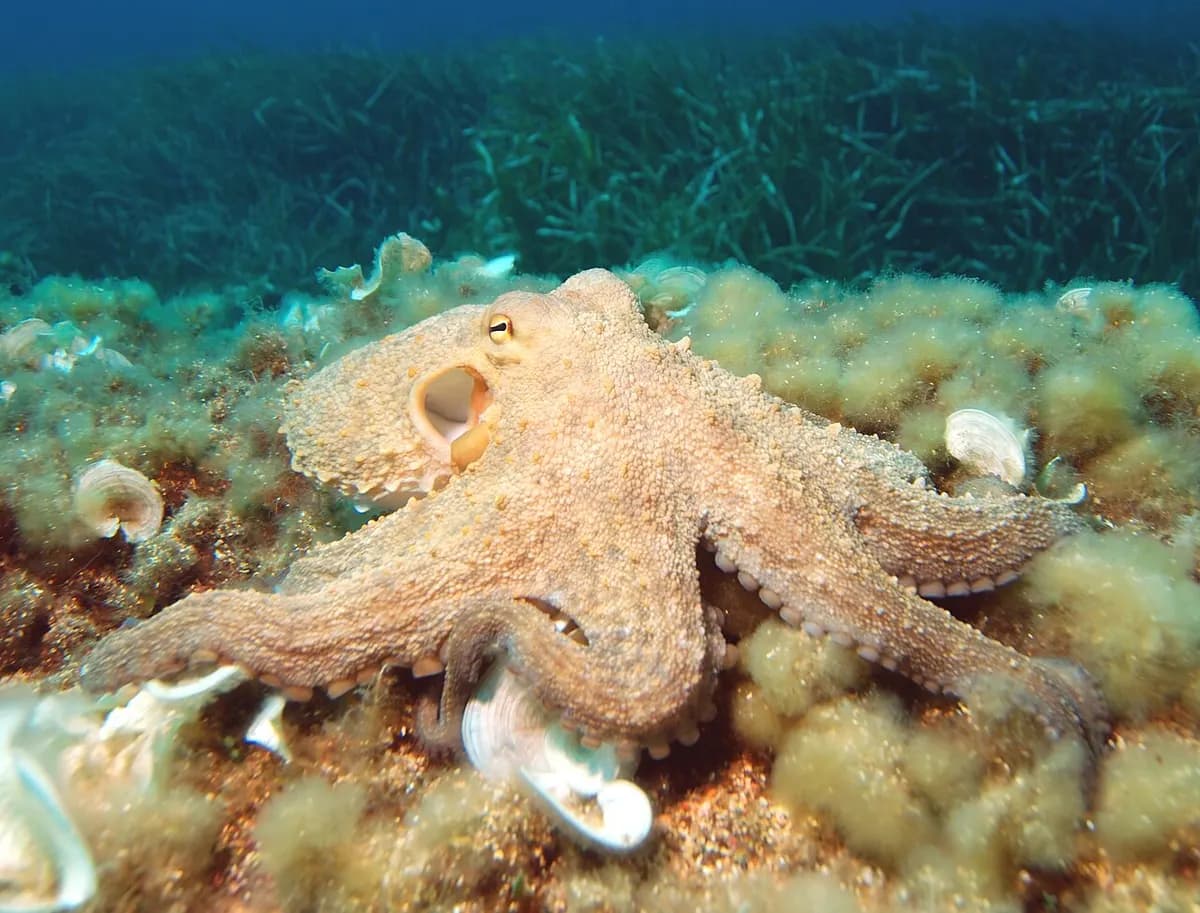
Three hearts
Two branchial hearts push blood through the gills. A third, systemic heart sends it around the body. When an octopus swims, the systemic heart stops beating. That may be one reason octopuses usually crawl: swimming is exhausting.
Blue blood
Our blood carries oxygen with iron-based haemoglobin. Octopus blood uses hemocyanin, which is built around copper and turns blue when oxygenated. It works better in cold, low-oxygen water.
A brain spread through the body
An octopus has around 500 million neurons, and roughly two-thirds are in its arms. Each arm can taste, touch and make simple decisions on its own. The philosopher Peter Godfrey-Smith suggests that an octopus is the closest we may come to meeting an intelligent alien: its last common ancestor with us was a worm-like creature more than 500 million years ago.
About the plural
“Octopus” comes from Greek (oktṓpous, “eight-foot”), not Latin, so the Latin-style plural “octopi” is a mistake. The pedantic Greek plural is “octopodes”. The ordinary English plural, octopuses, is the best choice.
Bring it up
“Octopuses have three hearts, and one of them stops when they swim. It might be why they prefer crawling.”
Follow the thread
- RelatedSpicy isn’t a taste. It’s pain. Another case where a chemical detail (copper blood, pain receptors) explains a creature’s behaviour.
- RelatedA slime mould designed the Tokyo rail network Two kinds of intelligence spread through a body rather than concentrated in a brain.
- Same patternHow a meat-eater’s body survives on bamboo Another animal whose strange body makes sense once you see the trade-offs it makes.