Why your keyboard says QWERTY
The layout you type on every day was designed for a machine that no longer exists, and the famous reason for it may be wrong.
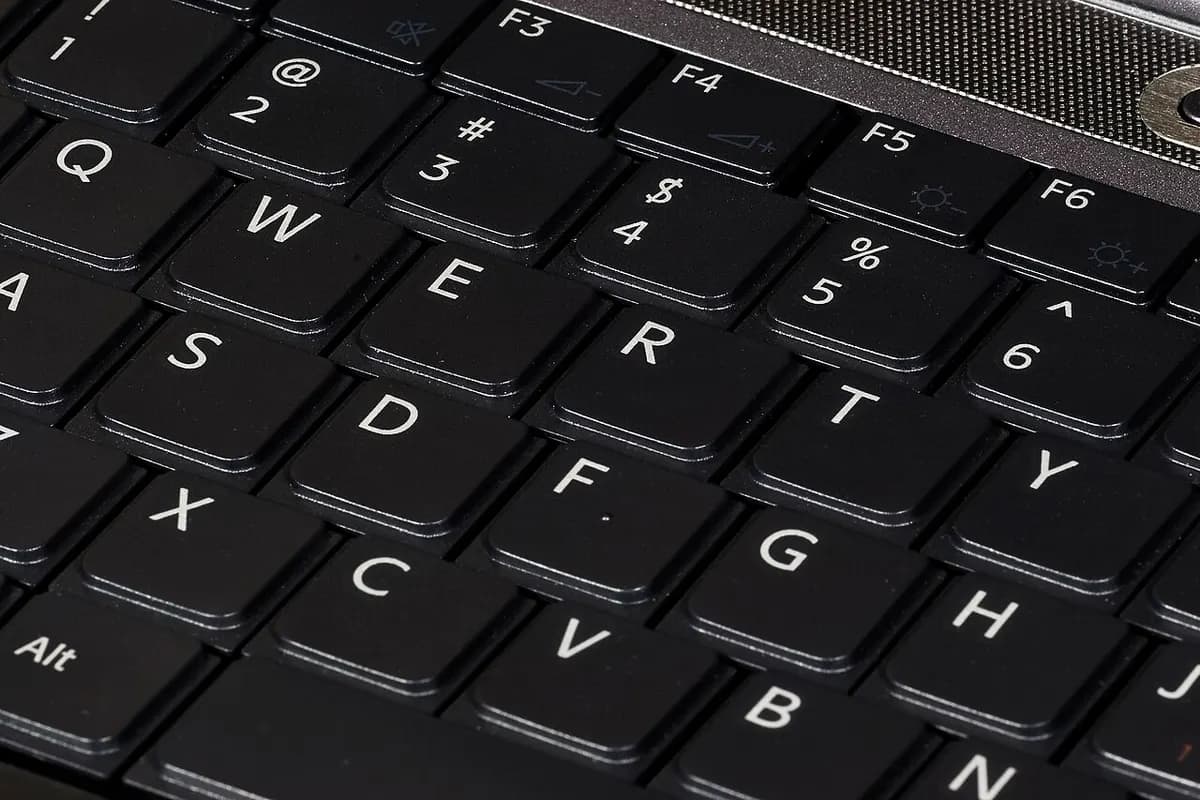
The layout took years of tinkering by Christopher Latham Sholes, a Wisconsin printer and politician, and his collaborators. By the time Remington started selling the Sholes and Glidden typewriter in 1874, the top row read QWERTY.
The story everyone tells
The classic explanation is that early typebars jammed when neighbouring keys were hit in quick succession. So Sholes separated common letter pairs, and in effect slowed typists down. It is neat, but the evidence is thin. “Slowing down” is not what he set out to do, and common pairs such as “er” and “re” still sit next to each other.
The telegraph theory
In 2011 the Japanese researchers Koichi and Motoko Yasuoka traced the layout’s evolution through patents and prototypes. Their argument is that some of the first serious customers were telegraph operators transcribing Morse code. Arrangements such as Z next to S and E may reflect letters that were easily confused in American Morse. They see the layout as the product of customer feedback over many years, not a single grand design.
Why we still use it
When a standard has millions of trained users, switching is very expensive. Even layouts claimed to be better, such as Dvorak (1936), never displaced it. Economists use QWERTY as the textbook example of path dependence: early, sometimes accidental choices that become locked in.
Bring it up
“There’s a theory that the keyboard you’re typing on was shaped by telegraph operators decoding Morse code.”
Follow the thread
- Same patternThe devil’s interval was never banned A neat origin tale that gets repeated far more confidently than the evidence supports.
- RelatedThe Post-it Note came from a failed glue Office objects whose design came about by accident and then became a standard.
- InfluencedThe Victorian internet Early typewriters were sold to telegraph operators, whose transcription needs may have shaped the layout.
- Same pattern“Ye Olde Shoppe” was always pronounced “the” Technology limits (available type, then keyboards) shaped how we write.