Everyday Life
The ordinary, explained.

Cleopatra lived closer to the Moon landing than to the pyramids
The Great Pyramid was already about 2,500 years old when Cleopatra was born. Ancient history is much longer than it feels.
In a Kazakh home, a half-empty cup is a compliment
Kazakh hosts pour tea only part-way, so they can keep refilling it while you stay and talk. A cup filled to the brim can be a polite hint.
In a room of 23 people, two probably share a birthday
It sounds impossible with 365 days to choose from, but the odds pass 50% with just 23 people and reach 99.9% with 70.
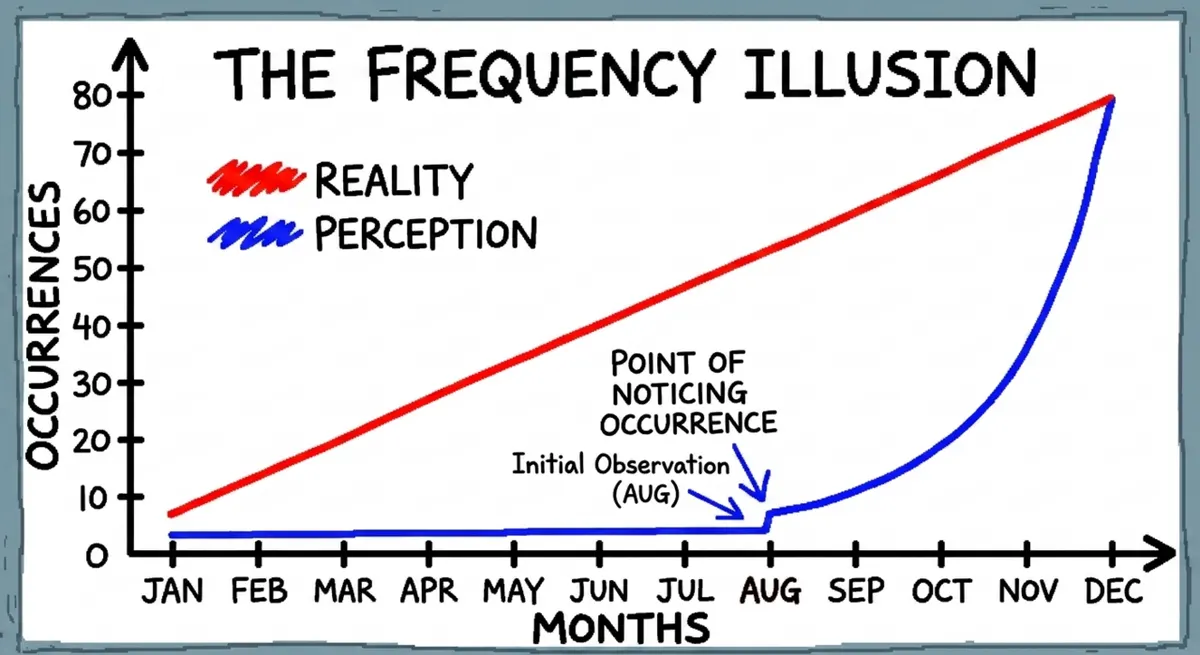
Once you notice something, it’s everywhere
You learn a new word, and the next day you see it three times. The world didn’t change; your attention did.
Pink for girls and blue for boys is younger than your grandparents
A century ago a trade magazine told shops that pink was for boys. The colour code we treat as ancient only settled in the mid-20th century.
The Post-it Note came from a failed glue
A 3M chemist made an adhesive that barely stuck. It took six years and a slipping hymn-book bookmark to find a use for it.
The Ship of Theseus
If you replace every plank of a ship one by one, is it still the same ship? And if someone builds a second ship from the old planks, which one is the original?
Three meals a day is a fairly modern habit
In much of medieval northern Europe, people ate two main meals: a midday dinner and an early supper. Breakfast became normal because of towns, work and school.
Why “mama” sounds the same almost everywhere
Mandarin, Swahili, Persian and Spanish are unrelated, yet children everywhere call their mother something like “mama”. In Georgian, though, “mama” means father.

Why Christmas is on 25 December
The Bible never gives a date for Jesus’s birth. Historians have two main explanations for 25 December, and many Orthodox Christians celebrate on 7 January.
Why lottery winners aren’t as happy as you’d think
We adapt to good fortune surprisingly fast. Psychologists call it the hedonic treadmill: you keep running and stay in the same place.
Why Ramadan moves about 11 days earlier every year
The Islamic calendar follows the moon, not the sun, so Ramadan travels through every season in about 33 years.

Why the sky is blue, and not violet
Air scatters blue light more than red. By that logic the sky should be violet. Here is why it isn’t.

Why your keyboard says QWERTY
The layout you type on every day was designed for a machine that no longer exists, and the famous reason for it may be wrong.