Cleopatra lived closer to the Moon landing than to the pyramids
The Great Pyramid was already about 2,500 years old when Cleopatra was born. Ancient history is much longer than it feels.
2 min read
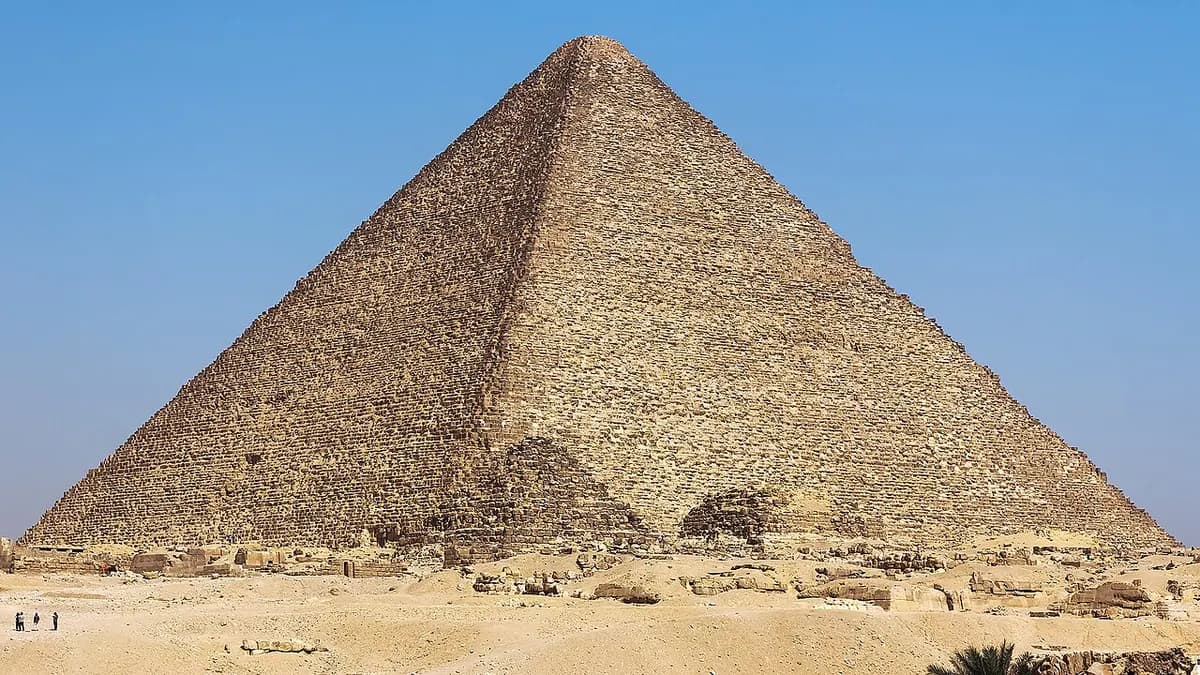
We tend to put “Ancient Egypt” in one mental box, with pharaohs, pyramids and Cleopatra all together. But Egyptian civilisation lasted for about 3,000 years.
| Event | Date |
|---|---|
| Great Pyramid built | c. 2560 BC |
| Cleopatra dies | 30 BC |
| Apollo 11 lands on the Moon | 1969 AD |
Pyramid → Cleopatra: about 2,530 years. Cleopatra → Moon landing: about 2,000 years.
Cleopatra was also Greek-Macedonian by descent, the last ruler of the Ptolemaic dynasty founded by one of Alexander the Great’s generals. To her the pyramids were ancient monuments, as old to her as the Roman Empire is to us.
Other timelines that feel wrong
- Woolly mammoths were still alive on Wrangel Island (Arctic Siberia) around 2000 BC, after the pyramids were built.
- Tyrannosaurus rex lived closer in time to us than to Stegosaurus.
- The University of Oxford was teaching before the Aztec capital was founded.
These comparisons are useful because they correct a common mistake: we compress the distant past and stretch the recent past.
Bring it up
“Cleopatra lived closer in time to us landing on the Moon than to the building of the Great Pyramid.”
Follow the thread
- RelatedJesus was probably born “Before Christ” BC dates count down, which makes comparing ancient timelines harder than it looks.
- Same patternOxford University is older than the Aztec Empire Another timeline comparison that breaks our mental model of history.
- RelatedThe Terracotta Army was found by farmers digging a well Qin Shi Huang and Cleopatra were separated by less than two centuries, and both ruled from places full of older monuments.