The computer that was designed in 1837
Charles Babbage designed a steam-age machine with memory, a processor and punched-card programs, then never finished building it.
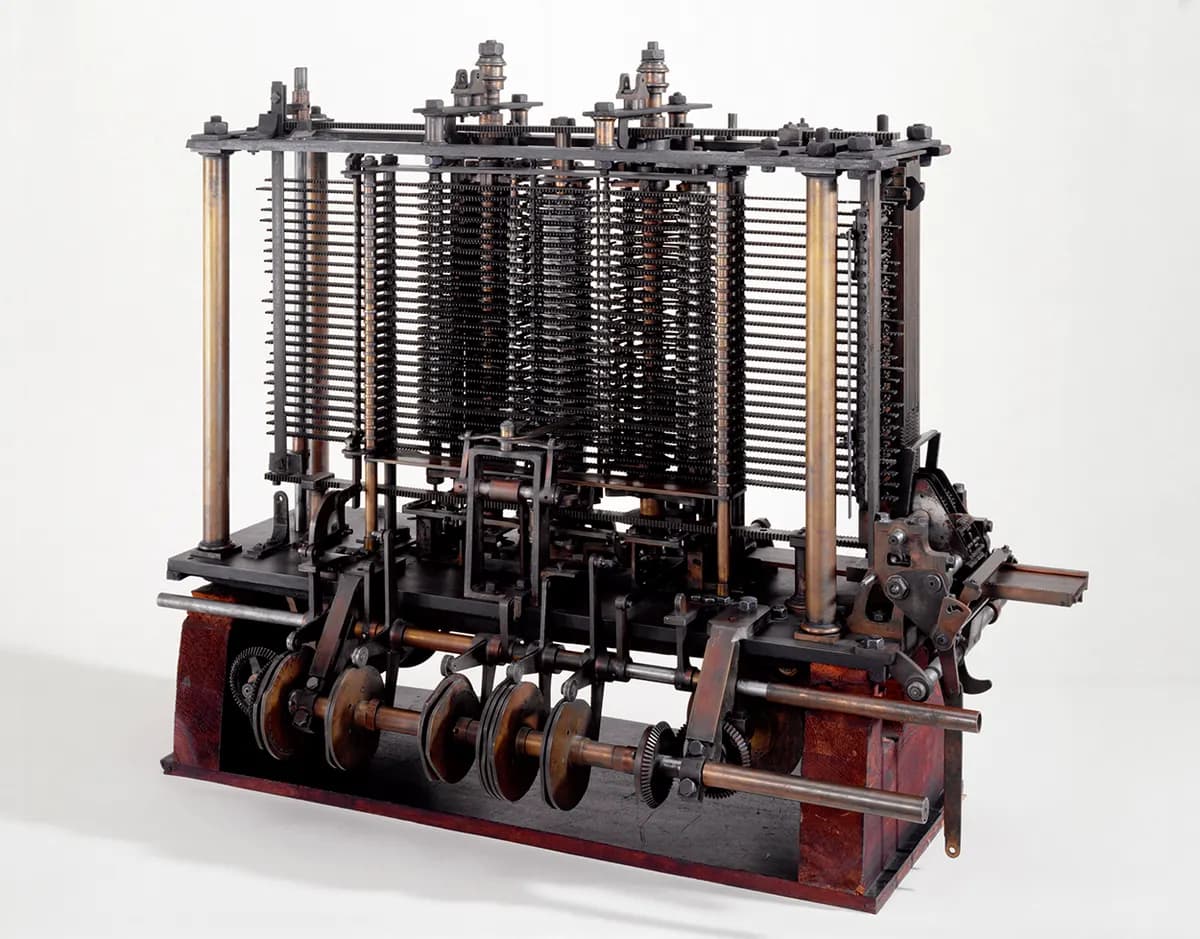
Charles Babbage first designed a Difference Engine, a huge calculator for producing error-free mathematical tables. Then, in 1837, he described something much more ambitious.
The Analytical Engine was to be programmable. Its parts map surprisingly well onto a modern computer:
| Babbage’s term | Modern equivalent |
|---|---|
| The Store | Memory |
| The Mill | Processor (CPU) |
| Punched cards | Program and input |
| Printer and bell | Output |
It could also make decisions, jumping to different instructions depending on a result. That conditional branching is what makes a calculator a computer.
Why it was never built
Funding disputes, the precision engineering required, and Babbage’s habit of redesigning everything all got in the way. When he died in 1871, only fragments existed.
There is a modern postscript. In 1991, the bicentenary of Babbage’s birth, London’s Science Museum built his Difference Engine No. 2 from the original drawings using tolerances available in his era. It worked, which suggests the problem was never the idea.
Follow the thread
- Part ofThe first computer programmer was a poet’s daughter Her notes are the most important description of Babbage’s machine and what it could do.
- RelatedThe dream of thinking machines is thousands of years old Babbage’s engine was the first serious design for a general-purpose reasoning machine.
- InfluencedComputers began as looms Babbage took the idea of punched-card instructions directly from the Jacquard loom.