The language that came back after 1,700 years
For about 1,700 years nobody spoke Hebrew as a mother tongue. Then, in 1882, a baby in Jerusalem became its first native speaker in modern times.
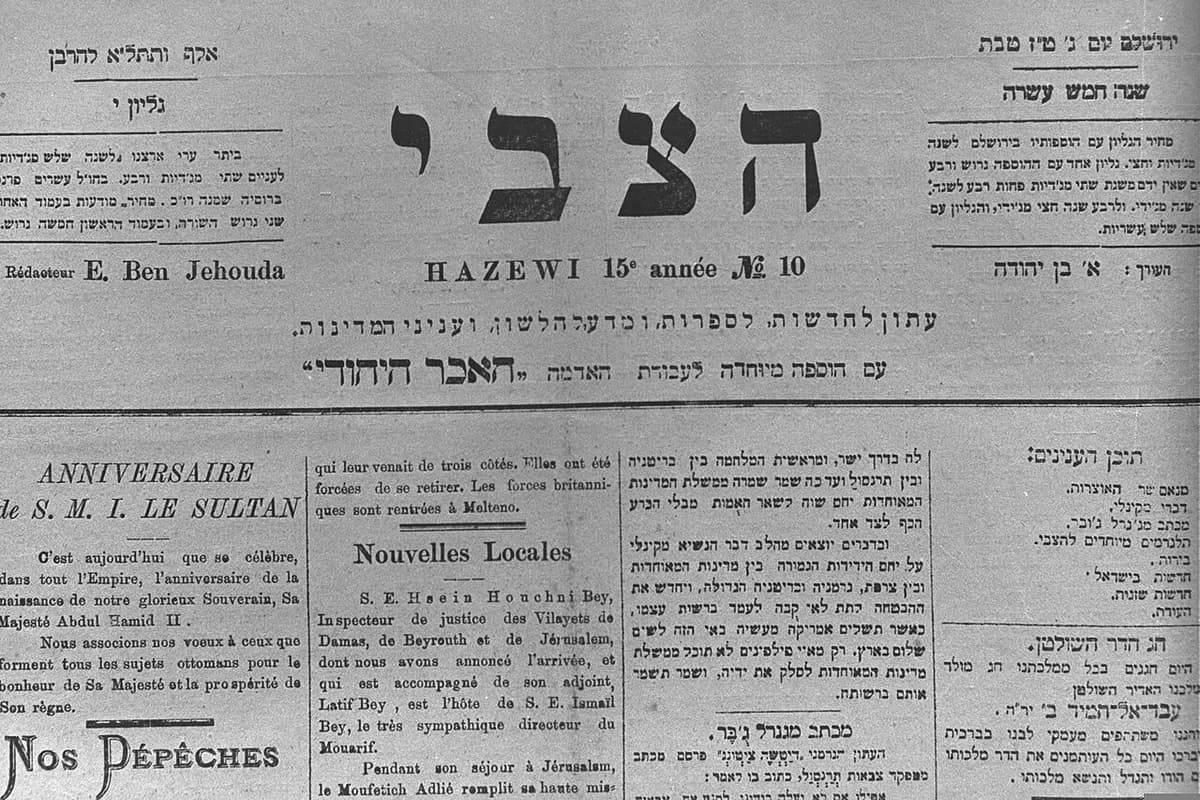
Hebrew never died in the usual sense. For nearly two millennia it was read, prayed, studied and written: legal commentaries, poetry and letters between scholars. But from roughly the 2nd century CE, it was nobody’s first language. No child grew up with Hebrew as the language of the kitchen and the playground.
A family experiment
Eliezer Ben-Yehuda (1858–1922) moved to Jerusalem in 1881 convinced that a Jewish national revival needed a shared spoken language. He insisted that his household speak only Hebrew. His son Itamar Ben-Avi, born in 1882, is described as the first native speaker of Modern Hebrew.
Ben-Yehuda also started a vast dictionary, coining words for things the ancient language never needed, from newspapers to ice cream.
Not one man’s achievement
The popular story credits Ben-Yehuda alone, but historians point to the schools and agricultural settlements of the First and Second Aliyah (waves of immigration from the 1880s onwards). There, teachers taught in Hebrew and children from many countries, speaking Yiddish, Russian, Arabic and Ladino, adopted it as their common language. Ben-Yehuda was the symbol. The children did the reviving.
Bring it up
“Hebrew had no native speakers for about 1,700 years, and then a family in Jerusalem decided to raise their son in it.”
Follow the thread
- RelatedBasque is related to no other language on Earth Both show what it takes for a minority language to survive under pressure.
- In contrastEsperanto has native speakers Two 1880s projects to create a spoken language: one revived an ancient tongue, the other invented a new one.
- RelatedWhy English spelling makes no sense Revival forces choices about pronunciation that, in living languages, happen by drift.
- RelatedKazakh has been written in three alphabets in a century Language and script choices often carry national and political meaning.
- RelatedOne of the oldest faiths, and Freddie Mercury’s Small, ancient communities that kept their identity through migration and centuries of pressure.