Bhutan measures Gross National Happiness
In 1972 Bhutan’s young king declared that happiness mattered more than GDP. The idea reached the UN, and also attracted serious criticism.
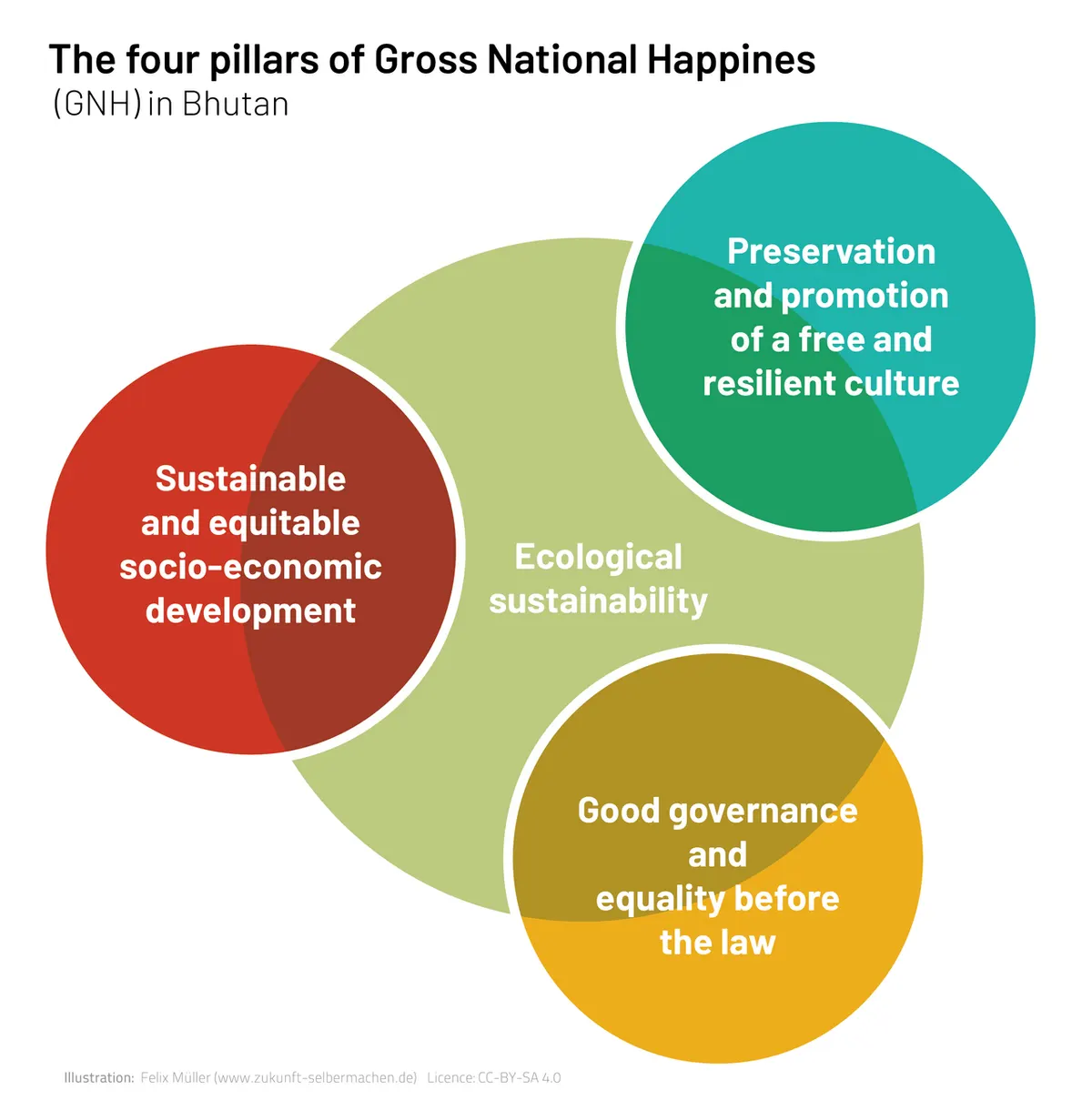
In 1972 the young King Jigme Singye Wangchuck of Bhutan said that Gross National Happiness was more important than Gross Domestic Product. Development, he argued, should be measured by how well people live, not just by how much they produce.
Turning a slogan into a measure
For decades GNH was a guiding philosophy. Bhutan’s 2008 constitution made it a goal of government, and the Centre for Bhutan Studies built an index based on nationwide surveys. It covers nine domains:
- psychological wellbeing
- health
- time use
- education
- cultural diversity and resilience
- good governance
- community vitality
- ecological diversity and resilience
- living standards
“Time use” stands out: it asks whether people have enough time for sleep, family and rest, not only for work.
Global influence
In 2011 the UN General Assembly passed resolution 65/309, inviting countries to measure happiness and wellbeing. The first World Happiness Report followed in 2012, and 20 March became the International Day of Happiness.
The criticism
GNH has critics. Before democratisation, Bhutan expelled over 100,000 ethnic Nepali residents (the Lhotshampa), many of whom spent years in refugee camps. Observers have also pointed to persistent poverty, and argue that GNH has worked partly as national branding.
The idea is worth taking seriously; the image of a “happiest country on Earth” deserves more scepticism.
Bring it up
“Bhutan officially measures happiness instead of just GDP, using nine domains, including how people spend their time.”
Follow the thread
- RelatedWhy lottery winners aren’t as happy as you’d think Why measuring happiness is harder than measuring income.
- RelatedWhen a measure becomes a target Any national index risks becoming a target, or a public-relations tool.
- In contrastThe Big Mac index Two unconventional ways of measuring how countries are doing.
- RelatedNepal’s flag comes with geometry instructions Two Himalayan neighbours that do things their own way.
- RelatedChina owns nearly every giant panda on Earth Two countries turning something soft (happiness, cuteness) into national branding.