Does listening to Mozart make you smarter?
A small 1993 experiment about spatial puzzles turned into the belief that Mozart makes babies clever. The science never said that.
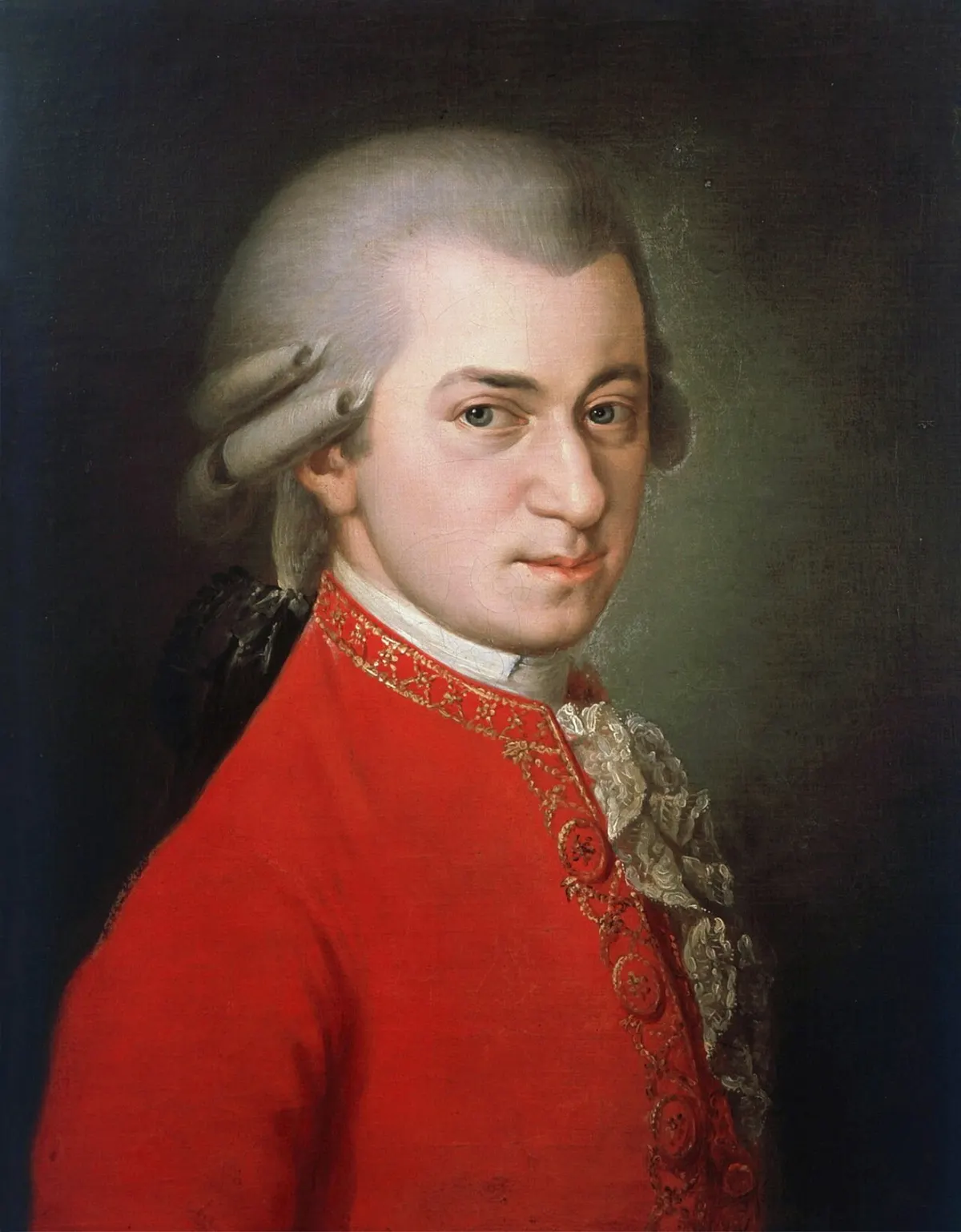
You may have heard that playing Mozart to a baby will make the child smarter. It is one of the most repeated claims in popular psychology, and it is built on very little.
What the experiment found
In 1993 Frances Rauscher, Gordon Shaw and Katherine Ky published a short paper in the journal Nature. University students listened to ten minutes of a Mozart sonata, to relaxation instructions, or to silence, and then did a spatial reasoning task. After the Mozart, scores were slightly higher. The gain faded within about 10 to 15 minutes, and it applied to that one kind of task.
There were no babies, and no claim about general intelligence.
How it grew
The press shortened the story to “Mozart makes you smarter”. Products and CDs followed, and in the late 1990s the idea reached public policy: US officials in at least one state moved to give classical music to newborns. The label “Mozart effect” stuck.
What later research says
A large 2010 meta-analysis by Pietschnig, Voracek and Formann pooled many studies. It found little evidence for an effect specific to Mozart, and signs that the results were stronger in some labs and affected by publication bias. A more modest explanation is that music you enjoy can lift your mood and alertness, which helps a little for a little while. That would hold for other music, and for a good coffee.
The kinder takeaway
None of this means music is pointless. Learning to play an instrument is a different matter and is studied separately. The honest line is that Mozart is wonderful for its own sake, and that you do not need a study to justify it.
Bring it up
“The famous ‘Mozart effect’ came from one small study of college students and a spatial puzzle, nothing to do with babies.”
Follow the thread
- Same patternThe devil’s interval was never banned Another widely repeated claim about music that turns out to be much thinner than its reputation.
- Same patternThe 1960s chatbot people confided in Both are cases where a modest finding or illusion grew into a much bigger popular belief.
- RelatedThe Dunning–Kruger effect is not what the internet says Another psychology result that is repeated far more confidently than the evidence supports.
- Related“Happy Birthday” was copyrighted until 2015 A music story where the popular version differs from the documented history.