The doctor who said “wash your hands”
In 1847 Ignaz Semmelweis cut deaths on a Vienna maternity ward from about 18% to around 2% by making doctors wash their hands. The story of what happened next is more complicated than the legend.
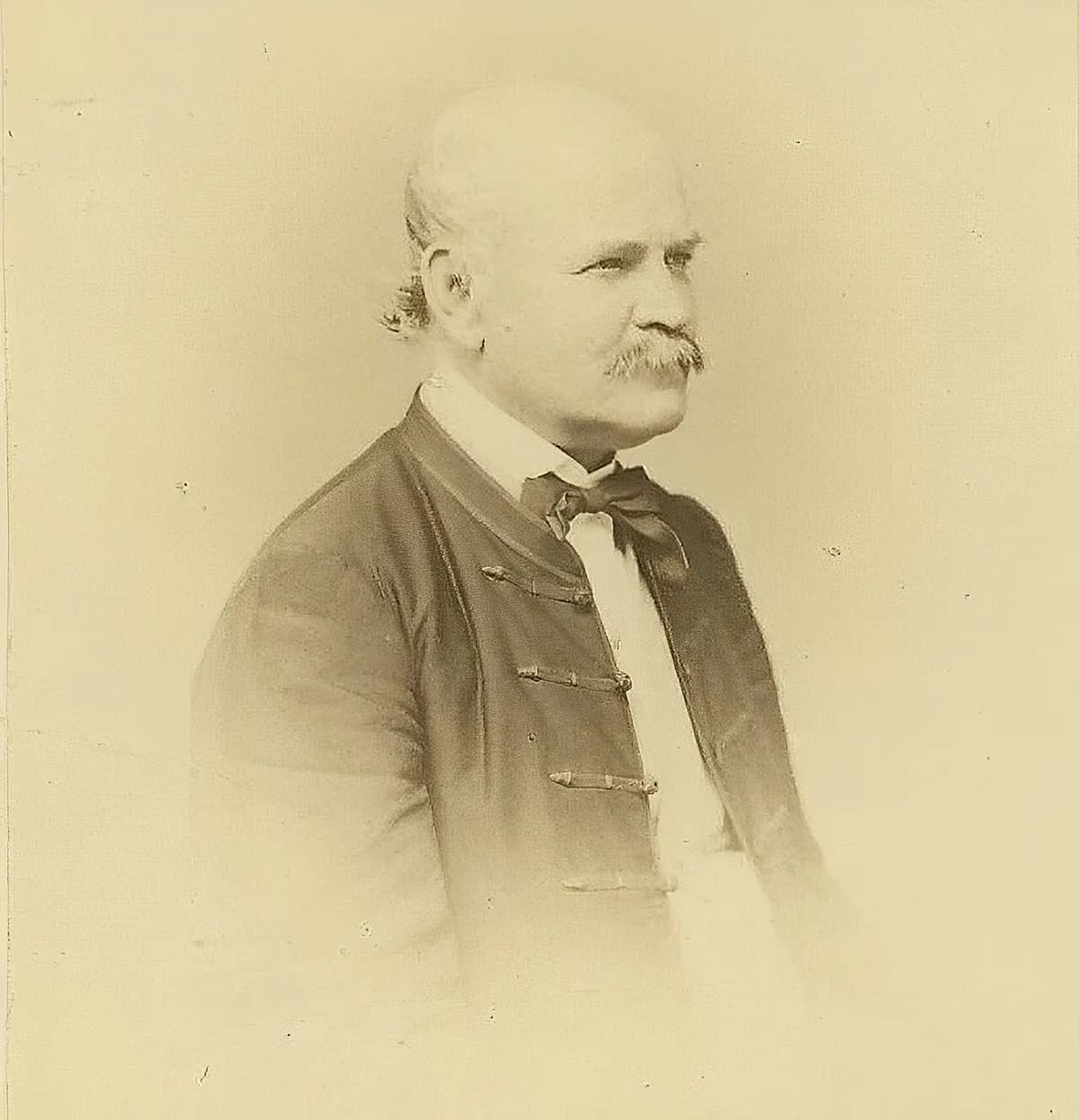
Vienna General Hospital had two maternity clinics. The First Clinic, staffed by doctors and medical students, had a death rate from childbed fever of around 10%. The Second Clinic, staffed by midwives, averaged under 4%. Women knew it, and some begged not to be admitted to the first.
The clue
In 1847 Semmelweis’s friend Jakob Kolletschka was cut by a student’s scalpel during an autopsy and died with symptoms very like childbed fever. The difference between the clinics clicked: doctors went straight from dissecting corpses to examining women in labour. Midwives didn’t do autopsies.
The experiment
From mid-May 1847, Semmelweis required doctors to wash their hands in chlorinated lime. Deaths in the First Clinic fell from 18.3% in April to 2.2% in June and 1.2% in July.
The legend and the history
The popular version: the establishment mocked him, he was driven out, and he died in an asylum. Parts of that are true. He left Vienna in 1849, his main book appeared only in 1861, and he died in an asylum in 1865, aged 47, probably from a wound after a beating by guards.
But historians, and some sharp discussion threads online, add nuance. Many doctors did adopt handwashing; what they rejected was his claim that all childbed fever had a single cause. Semmelweis also published late and attacked critics personally, which hurt his case. Germ theory, which explained why he was right, arrived only with Pasteur and Lister in the 1860s.
A useful takeaway: being right isn’t enough. The evidence needs explaining and communicating. That lesson, rather than “experts are fools”, is the one that holds up.
Bring it up
“In 1847 a doctor cut maternal deaths by about 90% just by making doctors wash their hands, and he still died in an asylum.”
Follow the thread
- RelatedWhy many Kazakhs can name seven generations of ancestors A traditional rule that, like handwashing, protected health long before anyone could explain the biology.
- Same patternThe man who decided the missiles weren’t real Someone who was right, but was barely rewarded at the time.
- RelatedThe Dunning–Kruger effect is not what the internet says Experts can be blind to their own errors, especially when the error implicates them.