The “Laughing Buddha” isn’t the Buddha
The cheerful, round-bellied figure in restaurants and gift shops is Budai, a Chinese monk from about a thousand years ago, not Siddhartha Gautama.
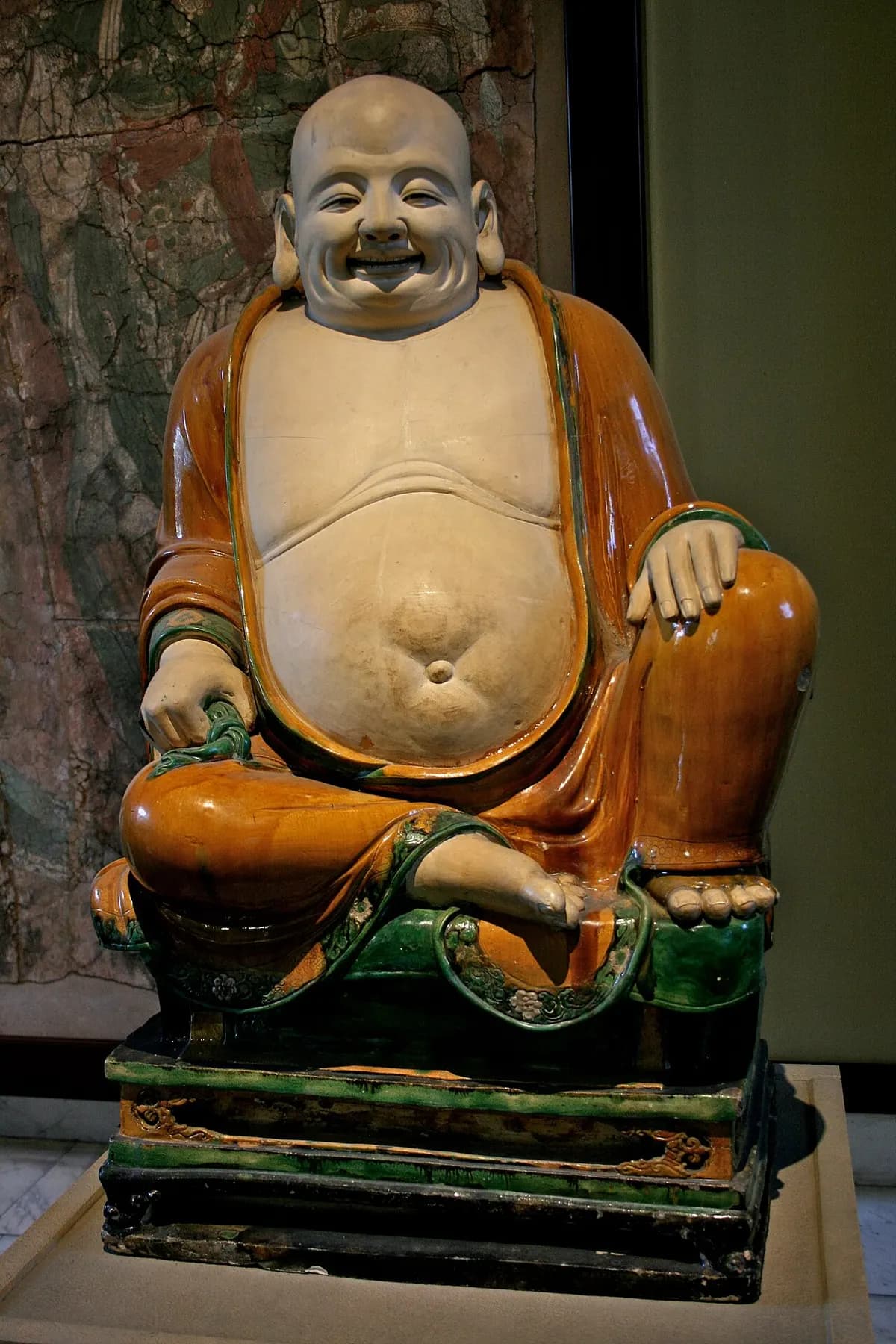
The statue is everywhere: a bald, smiling man with a huge belly, often carrying a sack, sometimes surrounded by children. Many people outside Asia call him “the Buddha” or “the Fat Buddha”.
Two different figures
- Siddhartha Gautama, the historical Buddha and founder of Buddhism, lived in northern India around the 5th century BC. He is traditionally shown slim, often seated in meditation, with a calm expression.
- Budai was a Chinese monk of the 10th century, whose real name is recorded as Qieci. Budai means “cloth sack”: he is described as wandering with a bag, and remembered for his good humour.
From monk to future Buddha
After his death, Budai came to be venerated in Chan Buddhism as a manifestation of Maitreya, the Buddha who is expected to come in the future. His belly and laugh came to stand for contentment, generosity and good fortune. Some people rub the belly for luck.
In Japan
When Chan spread to Japan as Zen, Budai became Hotei, one of the Seven Lucky Gods (Shichifukujin), who are popular around New Year.
So in many Chinese restaurants it isn’t the founder of Buddhism greeting you. It’s a cheerful wandering monk.
Bring it up
“The big laughing statue everyone calls ‘Buddha’ is actually a 10th-century Chinese monk called Budai.”
Follow the thread
- RelatedBorn Shinto, married Christian, buried Buddhist In Japan, Budai became Hotei, part of a religious culture that mixes traditions freely.
- RelatedPandas are almost absent from classical Chinese art How a figure or animal becomes an icon of a culture can be quite different from what outsiders assume.