Japan learned curry from the British Navy
Japanese curry came from India by way of the British, was adopted by the Japanese navy to fight a deadly vitamin deficiency, and is still served on navy ships every Friday.
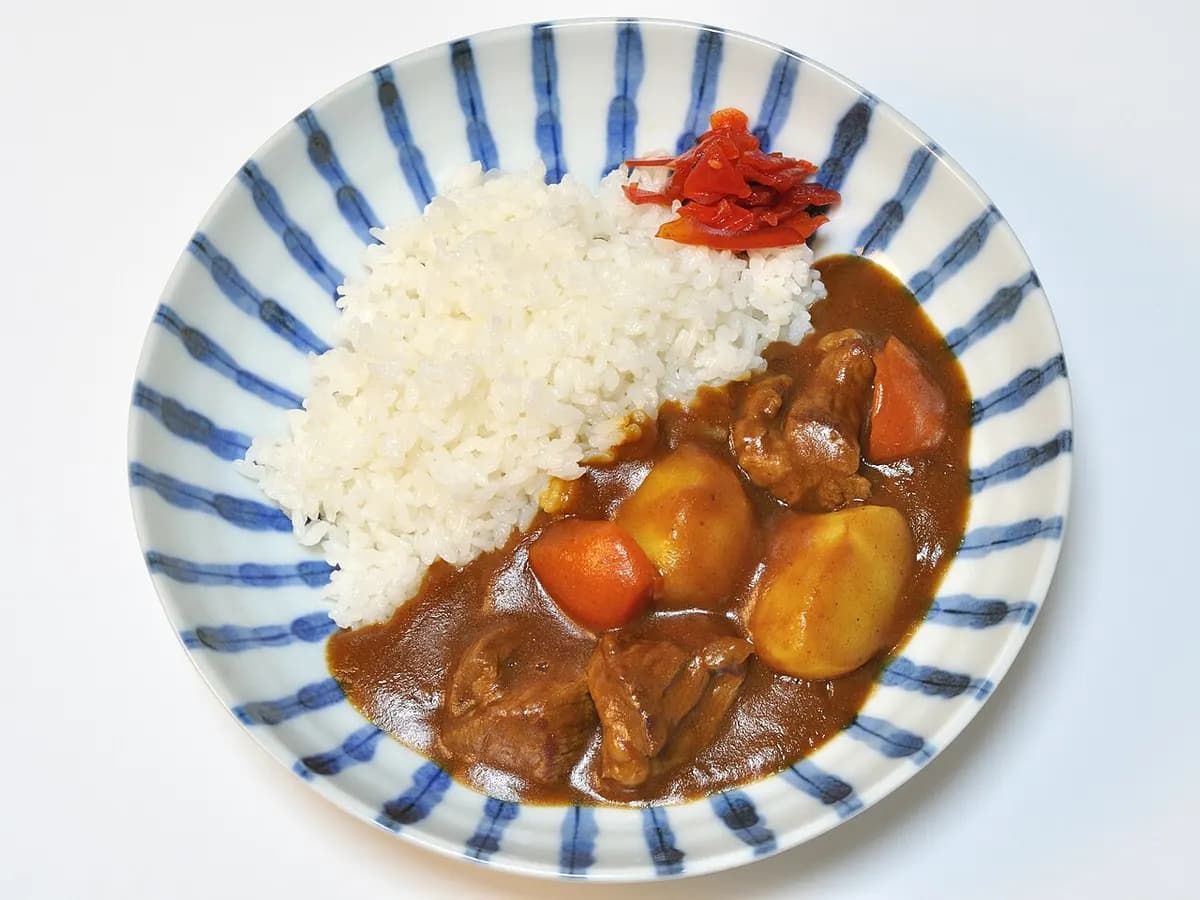
Japanese curry, thick, mild and brown, poured over rice with chunks of potato and carrot, is nothing like most Indian curries. That’s because it didn’t come directly from India.
Via the Royal Navy
During the Meiji era, as Japan rapidly modernised, curry appeared in Japanese cookbooks by 1872. It most likely came through the British, whose Royal Navy cooks used ready-made curry powder, itself a British invention for imitating Indian flavours. The British style used a flour-thickened sauce, a bit like a stew.
Curry against beriberi
The Imperial Japanese Navy had a serious problem: sailors living mainly on white rice were getting beriberi, a disease caused by lack of thiamine (vitamin B1). Curry with meat and vegetables over rice was quick to make and helped prevent it.
Sailors went home and took curry with them. Today Japan’s Maritime Self-Defense Force still serves curry every Friday, and each ship’s galley has its own recipe.
The apple twist
People often ask why Japanese curry roux contains apple and honey. The answer is a 1963 product: House Foods’ “Vermont Curry”, made with apples and honey to appeal to children. It was a huge success, and sweet, mild curry became a childhood staple. By 2000, curry was eaten more often in Japan than sushi or tempura.
Bring it up
“Japanese navy ships still serve curry every Friday, a tradition that started as a way to prevent a vitamin deficiency.”