Artificial Intelligence
The long story of machines that think, or seem to.
“Can machines think?”: Turing’s 1950 question
Alan Turing opened a 1950 paper with that question, then replaced it with a test, and answered Ada Lovelace by name.
AI got its name from a summer workshop proposal
In 1955 four researchers asked for funding for “a 2-month, 10-man study of artificial intelligence”, confident they could make a significant advance in one summer.
AI has gone through “winters” before
In 1970 a founder of AI predicted human-level machines within three to eight years. Within a few years funding collapsed, and it collapsed again in the late 1980s.
From a bedroom GPU to ChatGPT
In 2012 a neural network trained on two gaming graphics cards in a student’s bedroom crushed an image-recognition contest. Ten years later, chatbots built on the same lineage reached the public.
In 1958 the Navy said its neural network would one day be conscious
The first trainable neural network, the perceptron, was announced as the embryo of a computer that would “walk, talk, see, write, reproduce itself and be conscious of its existence”.
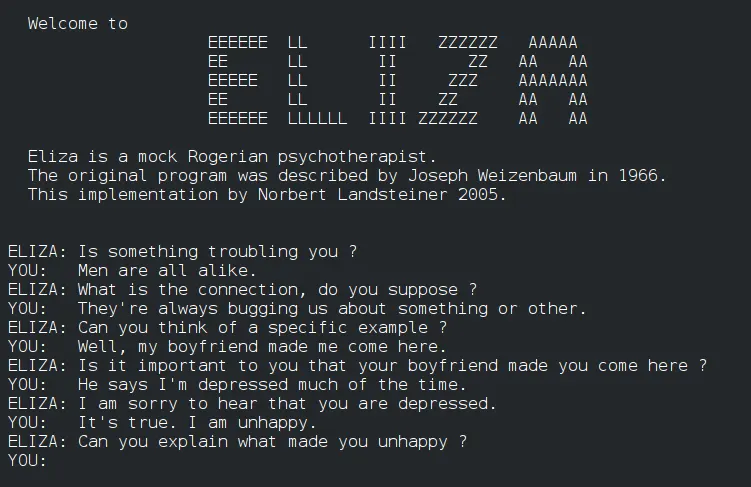
The 1960s chatbot people confided in
ELIZA just reflected your words back as questions. Its creator’s secretary still asked him to leave the room so she could talk to it in private.
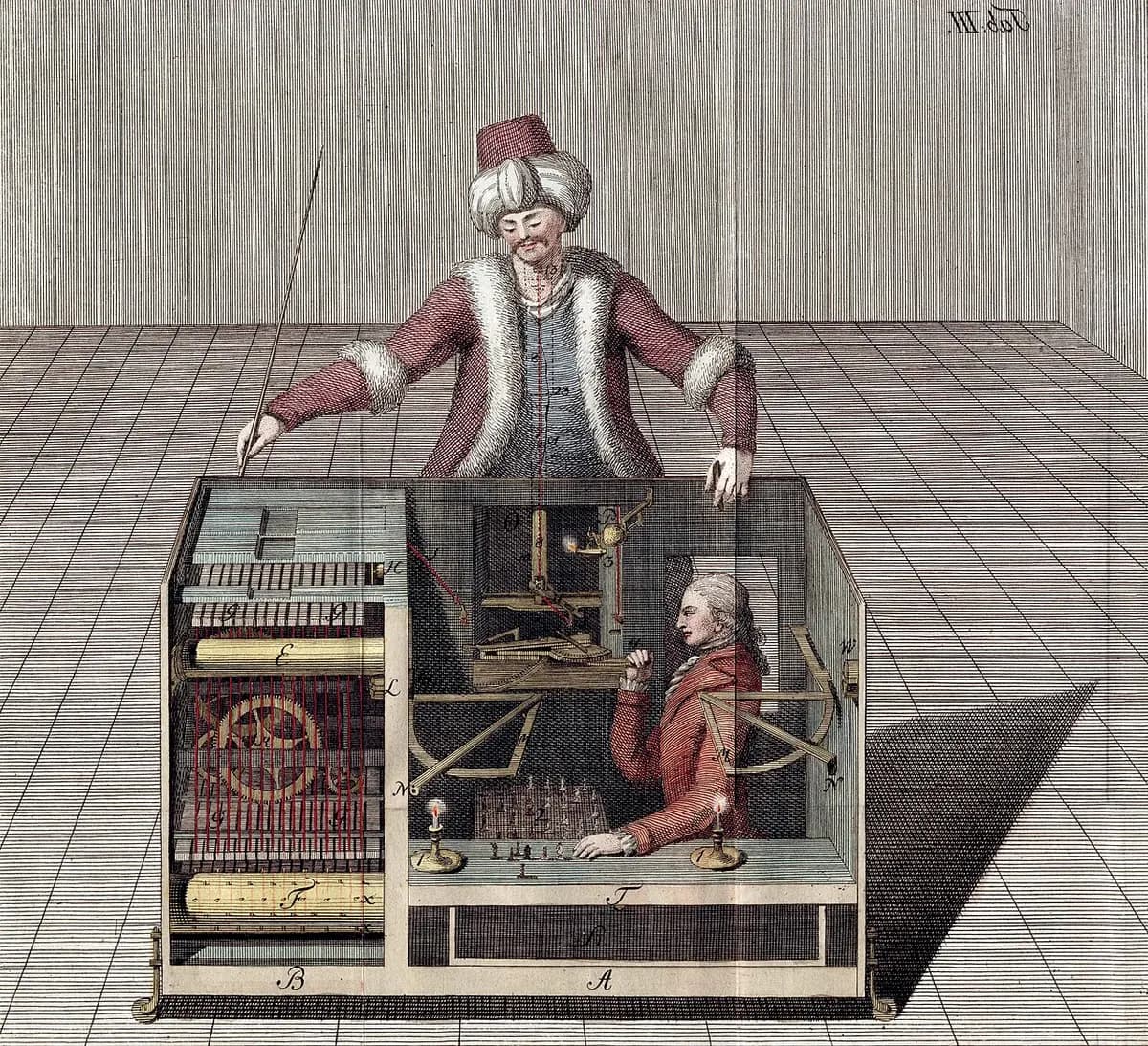
The chess-playing machine that had a man inside
From 1770, a turbaned mechanical figure beat players across Europe and America at chess. It was a brilliant hoax, and Amazon named a service after it.
The dream of thinking machines is thousands of years old
Long before computers, people imagined bronze giants, reasoning wheels and a language in which arguments could be settled by calculation.