“An eye for an eye” was a step forward
Hammurabi’s 3,800-year-old law code sounds brutal, but it was an attempt to make punishment proportionate, public and predictable.
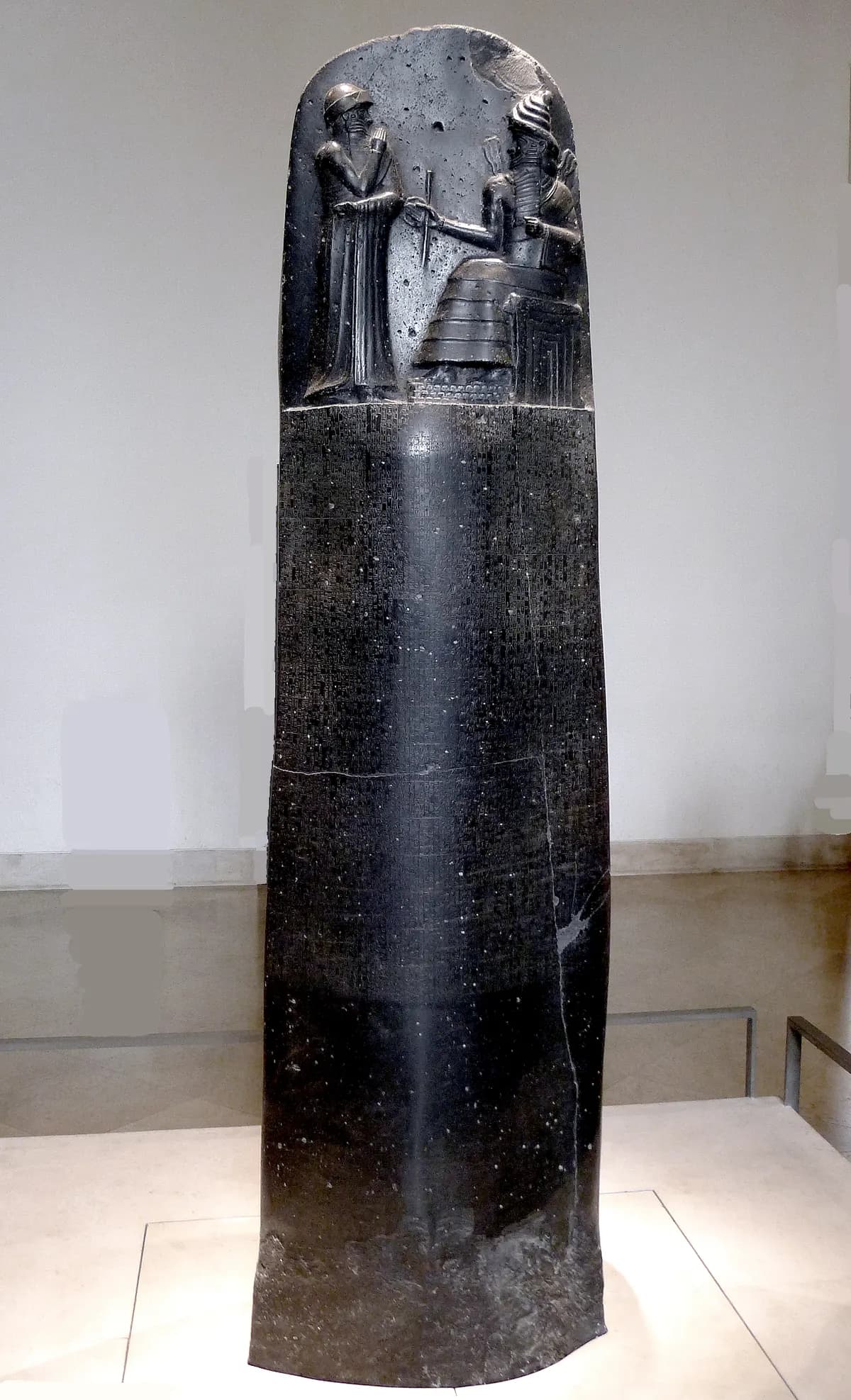
The Code of Hammurabi is carved on a black basalt stele more than two metres tall. At the top, Hammurabi stands before Shamash, the god of justice. Below are 282 laws. French archaeologists found it at Susa (in present-day Iran) in 1901, where it had been taken as war loot centuries after it was made. It is now in the Louvre.
What it covers
Most of it is not about crime. It covers contracts, wages, rent, loans, inheritance, marriage, divorce and professional liability. A builder whose house collapses and kills its owner can be put to death. A surgeon who botches an operation may lose a hand.
“An eye for an eye”
Law 196: if a man destroys the eye of another man, his eye shall be destroyed. It sounds harsh, but it caps retaliation. You can take an eye for an eye, not a life. Many historians read such rules as an attempt to replace feuds with proportionate, predictable penalties.
The equality only went so far. Punishments depended on social class: injuring a commoner or a slave often meant paying silver, not losing an eye.
Not the first
The Code of Ur-Nammu is about three centuries older. Hammurabi’s code is famous because it is so complete and well preserved, and because it sets out an idea we still rely on: laws should be written down, public, and the same every time.
Bring it up
“‘An eye for an eye’ was originally meant to limit punishment, not to encourage revenge.”
Follow the thread
- RelatedThe man behind the Miranda warning From carved stone to cards read aloud during arrests: law as something publicly stated.
- In contrastIn Britain, it’s an offence to handle salmon in suspicious circumstances Ancient laws written for everyone to read, versus modern laws that sound absurd out of context.
- RelatedThe veil of ignorance An ancient law code that openly ranked people by class, which is exactly what the veil asks us to question.